
Renovation costs can rise for several reasons: a concealed problem appears after demolition, a quote omits work you expected, or a finish selection costs more than its allowance. Some costs you can anticipate before construction; others only become clear once you open a wall, floor, or system. A good budget makes clear what is included, what is excluded, and how newly discovered work will be priced and approved.
In West Toronto’s older homes, certain issues are worth checking for early. Here’s how to spot the main cost categories before you commit.
Four Types of Renovation Costs to Separate
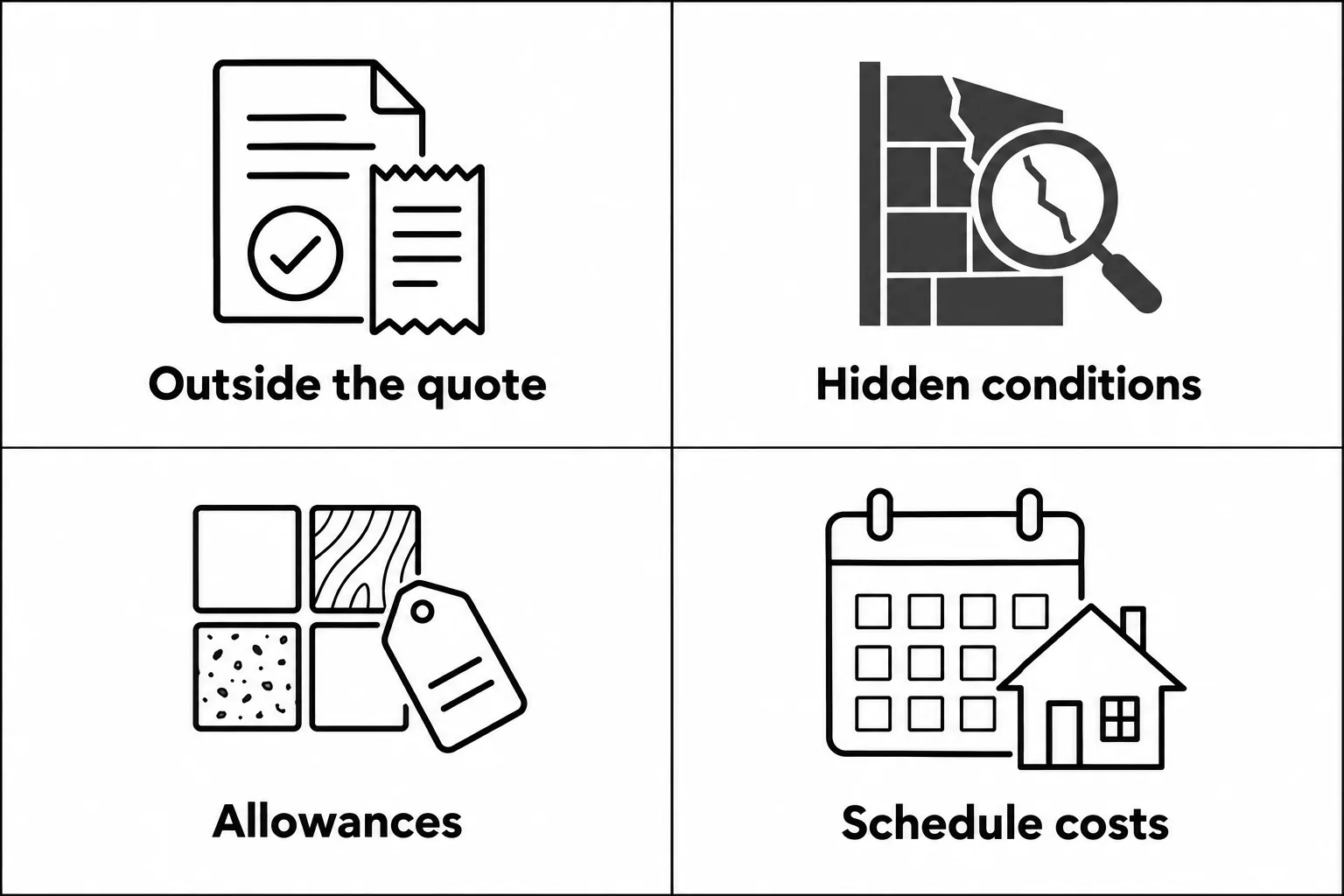
| Cost type | Examples | What to confirm |
|---|---|---|
| Known costs that may be outside the quote | Permits, drawings, disposal, taxes, and site protection | Are they included, excluded, or billed separately? |
| Hidden conditions | Rot, water damage, outdated wiring, or earlier structural changes | What can be inspected before work begins, and how will newly found work be handled? |
| Unselected items | Tile, fixtures, appliances, lighting or cabinetry allowances | What amount is included, and does it cover supply, tax, and installation? |
| Schedule and household costs | Storage, temporary accommodation, moving or temporary heating | Which costs may change if the schedule or access plan changes? |
Hidden Conditions Older Toronto Homes Can Reveal
Once demolition begins, an older home may reveal outdated wiring, aging water or drain lines, damaged framing, water damage or rot. Previous renovations may also have changed a wall or support in ways that need review before new work proceeds.
Some building materials, including certain insulation, floor tiles and duct materials, may contain asbestos. If suspect material could be disturbed, have it assessed by a professional before work begins. Health Canada recommends professional testing before major renovation or demolition when asbestos may be present.
A pre-construction assessment can help identify risks, and targeted inspections or exploratory openings may reduce uncertainty where appropriate. They cannot reveal every concealed condition, so the quote should also explain how newly discovered work will be assessed, priced, and approved.
Permits, Drawings and City Requirements
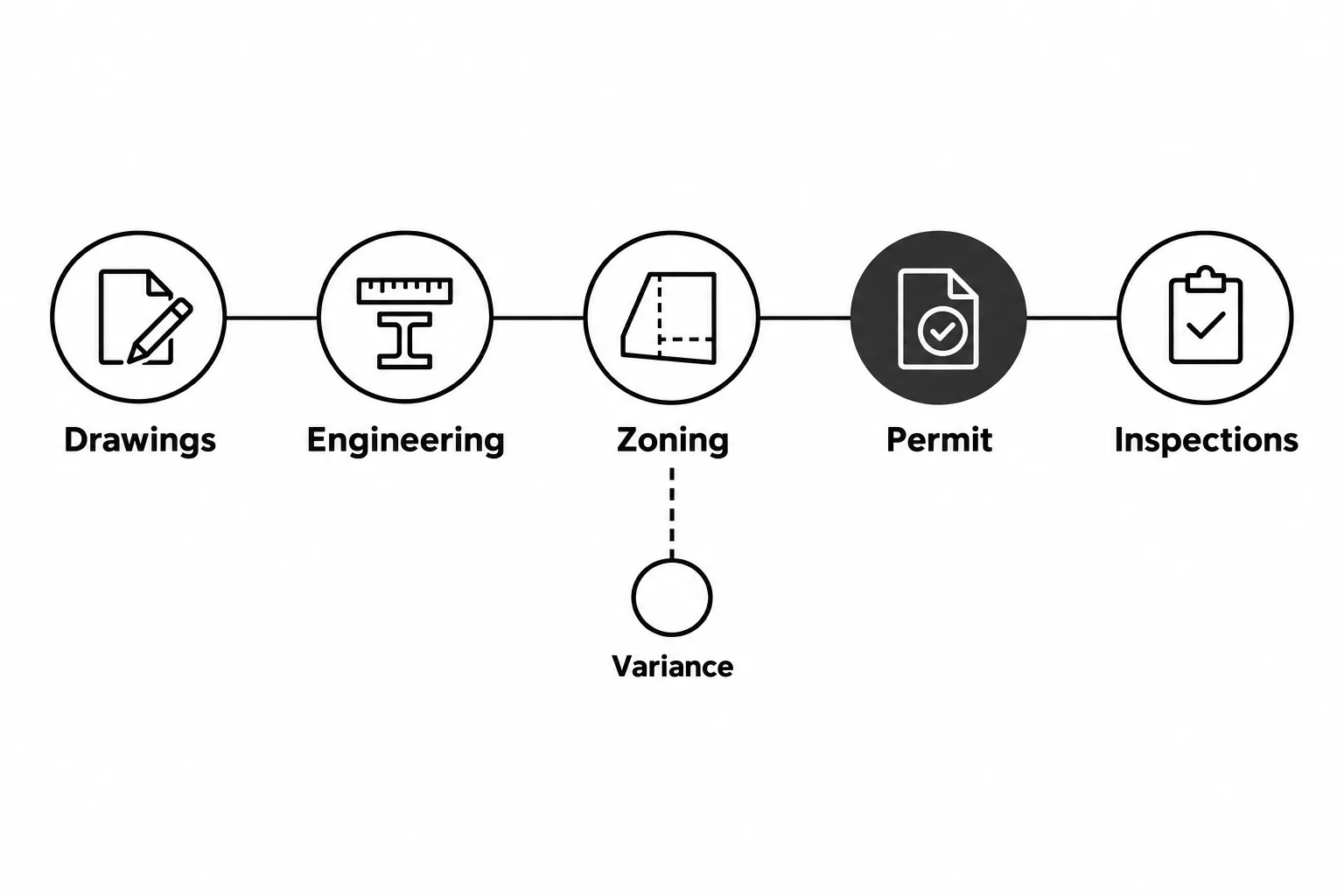
Permit fees are one part of the planning budget. Drawings, engineering when required, zoning review, inspections, and revisions may also add cost and time. Toronto requires a permit for structural or material alterations such as adding or removing walls, along with work such as underpinning. Check Toronto’s building permit guidance for the proposed work.
Toronto’s permit fees depend on the work being proposed. Check the current City of Toronto building permit fees and confirm whether related design or engineering costs are included in the quote.
If a design does not fit zoning rules, a minor variance may involve additional application costs, professional work, and review time. Find out whether that approval is needed before you settle on the design or schedule.
Ashford Homes handles design, permit applications, and construction as one team for its whole-home renovation projects. See the scope of our West Toronto home renovation service.
Code Upgrades That May Affect the Budget
Some projects may require upgrades related to the altered area or proposed use. Depending on the design, these may include alarms, guards, an exit that meets applicable requirements, or electrical and heating changes. A permit does not automatically mean the whole house must be upgraded; confirm what applies to the specific plans.
Underpinning may also involve drainage, waterproofing, or a sump pump, depending on the existing basement and project scope. Adding space or converting a single-family home to multiple units may require changes to heating, ventilation, fire separation, alarms, or exits. Confirm these items with the designer and permit team before construction begins.
Project Costs to Check Outside the Construction Quote
Ask whether the quote includes temporary accommodation during a major whole-home renovation, storage, moving, disposal, dust protection, cleanup, and any work to restore affected landscaping. A temporary kitchen, extra meals out, or pet care may also affect your household budget.
If the home may be vacant or under construction, ask your insurer how the work could affect your coverage. Some exterior or concrete work in winter may need temporary heat or protection; confirm whether those measures apply and are included.
Also confirm whether the quoted total includes HST. Ontario’s consumer guidance explains renovation estimates and contract terms; review the provincial guidance on renovation and repair contracts before signing.
Allowances and Change Orders
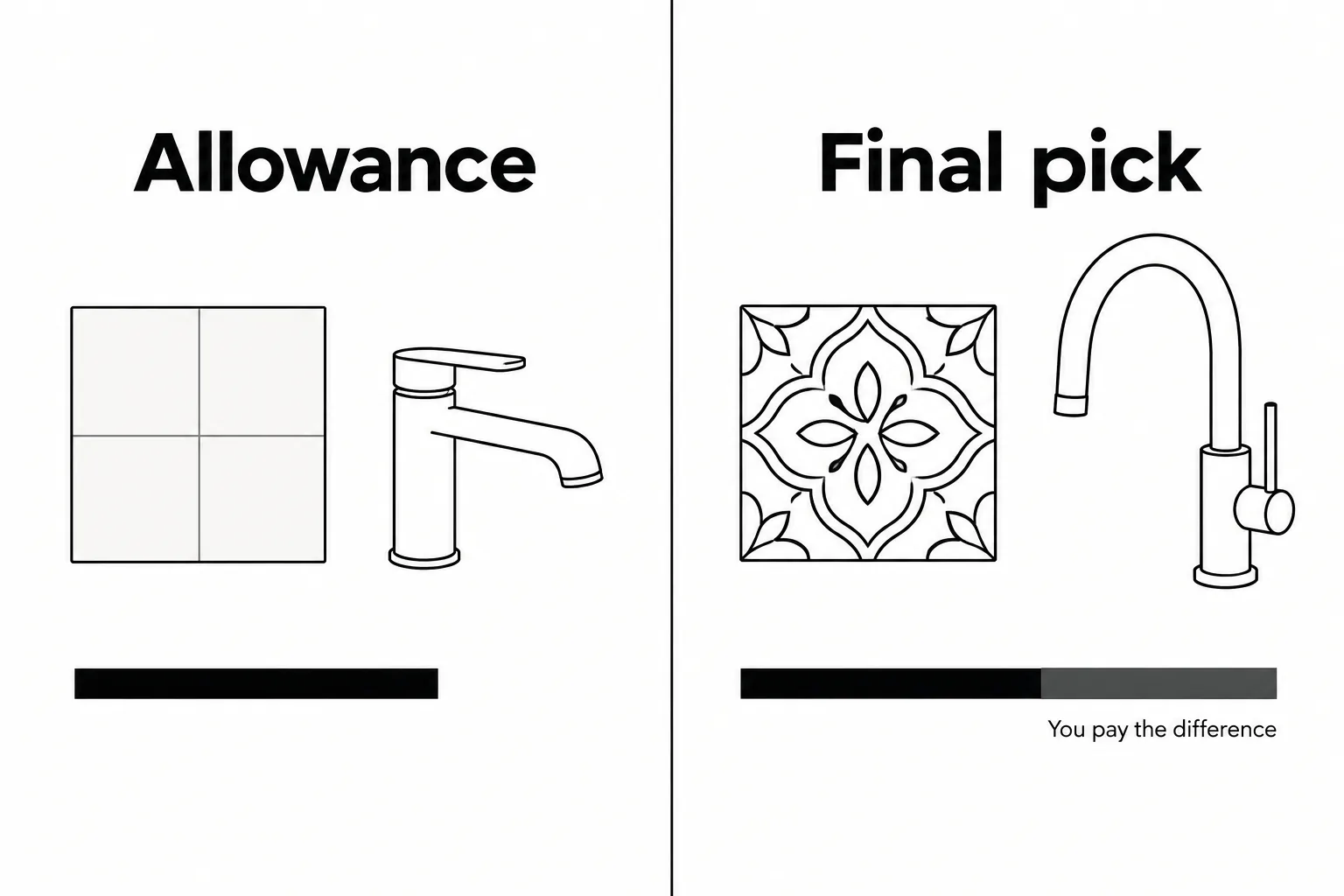
An allowance is a budget amount for an item that has not been selected or fully specified yet, such as tile, fixtures, lighting, or appliances. If the final selection costs more than the allowance, the difference may increase the project price. Ask what each allowance covers, including supply, tax, delivery, and installation.
A change order may be needed if the scope changes, for example, moving a wall, upgrading windows, or adding pot lights. Before the added work begins, ask for the change in writing, including its price and any schedule effect, and approve it. For more detail, see our guide to what a Toronto renovation contract should include.
For a long project, ask how material pricing is handled, how long selections or quotes remain valid, and whether supplier delays could affect the schedule. Custom windows or cabinets may have longer lead times, so finalize selections early where possible.
How to Set a Contingency Without Relying on the 30% Rule
There is no universal 30% rule that fits every renovation. The phrase is sometimes used for a contingency amount and sometimes for a renovation budget compared with a home’s value; neither is a rule that works for every project.
Set a contingency based on the home’s condition, how much work will be opened up, and what remains uncertain after the initial assessment. Keep it separate from known costs, allowances, and planned upgrades.
A contingency should not be used to cover work that was already known but left out of the quote.
Before signing, confirm the scope, ask for the exclusions list as well as the inclusions, and agree on how unplanned work will be documented and approved. Track approved changes against the original budget as the project progresses.
Budget Mistakes Homeowners Can Avoid
Some costly problems begin with decisions made before construction:
- Changing finishes before checking whether the layout itself needs work.
- Finishing a basement before assessing moisture or whether the ceiling height will meet the homeowner’s plans. If underpinning is being considered, compare its scope and cost before finishing. See our Toronto basement underpinning cost guide.
- Starting work that requires permits before confirming the approval requirements.
- Choosing the lowest bid without checking whether it includes the same scope, allowances, taxes, and exclusions as the other quotes.
- Planning only for current needs. If a future addition is likely, ask whether any design or structural work should be coordinated now. Whether doing so saves money depends on the project.
FAQs
Related readingHow to Choose a Renovation Contractor in TorontoRead the guide →Frequently asked questions
What can make a renovation cost more than expected?
Does a renovation quote include permits, tax, and disposal?
How much contingency should I budget for an older home?
Can I know all hidden costs before demolition?
Plan the Full Budget Before You Commit
A detailed scope, realistic allowances, and clear exclusions make it easier to understand what a renovation quote covers. Ashford Homes handles design, permits, and construction under one team, with a clear price and timeline before work starts. Clients can follow project communication and budget information through JobTread; learn more about our renovation process.
Ashford Homes has completed more than 100 homes in West Toronto and has 25 years of renovation experience. The company lives and works in the neighbourhoods it builds in, and its work is backed by a five-year warranty. For a major renovation, starting early gives time to define the scope and plan the design, permits, and schedule. Book a free consultation to talk through your project.
